














Few home repairs are as stressful and potentially expensive as an underground plumbing issue. When you suspect a water line break outside house, a flood of questions immediately follows. Who is responsible for fixing it? Will my homeowner’s insurance cover the cost? How do I stop the damage from getting worse? The uncertainty can be overwhelming. We created this guide to give you clear, straightforward answers. We’ll explain how to determine responsibility, what to expect from your insurance, and the immediate actions you should take to get the situation under control and protect your finances from a costly surprise.
Key Takeaways
- Watch for the Symptoms of a Leak: Unexplained wet spots in your yard, a sudden drop in water pressure, or an unusually high water bill are the most common signs that your underground water line may be broken.
- Understand Your Financial Responsibility: The water line on your property is your responsibility to repair, and most standard homeowner’s policies won’t cover the cost. Call your insurance agent to add a service line endorsement before you have a problem.
- Act Quickly to Minimize Damage: If you suspect a break, immediately shut off your home’s main water valve to prevent further flooding and foundation damage. Then, call a professional for a safe and effective repair—this is not a DIY job.
How to Spot a Water Line Break Outside
A broken water line outside your home can be tricky to detect since the pipes are buried underground. Unlike a leaky faucet, the signs aren’t always obvious until significant damage has occurred. Knowing what to look for is the first step in catching a problem early and preventing costly damage to your yard, foundation, and wallet. If you notice any of these red flags, it’s time to investigate a potential water leak repair.
Look for Puddles and Wet Spots
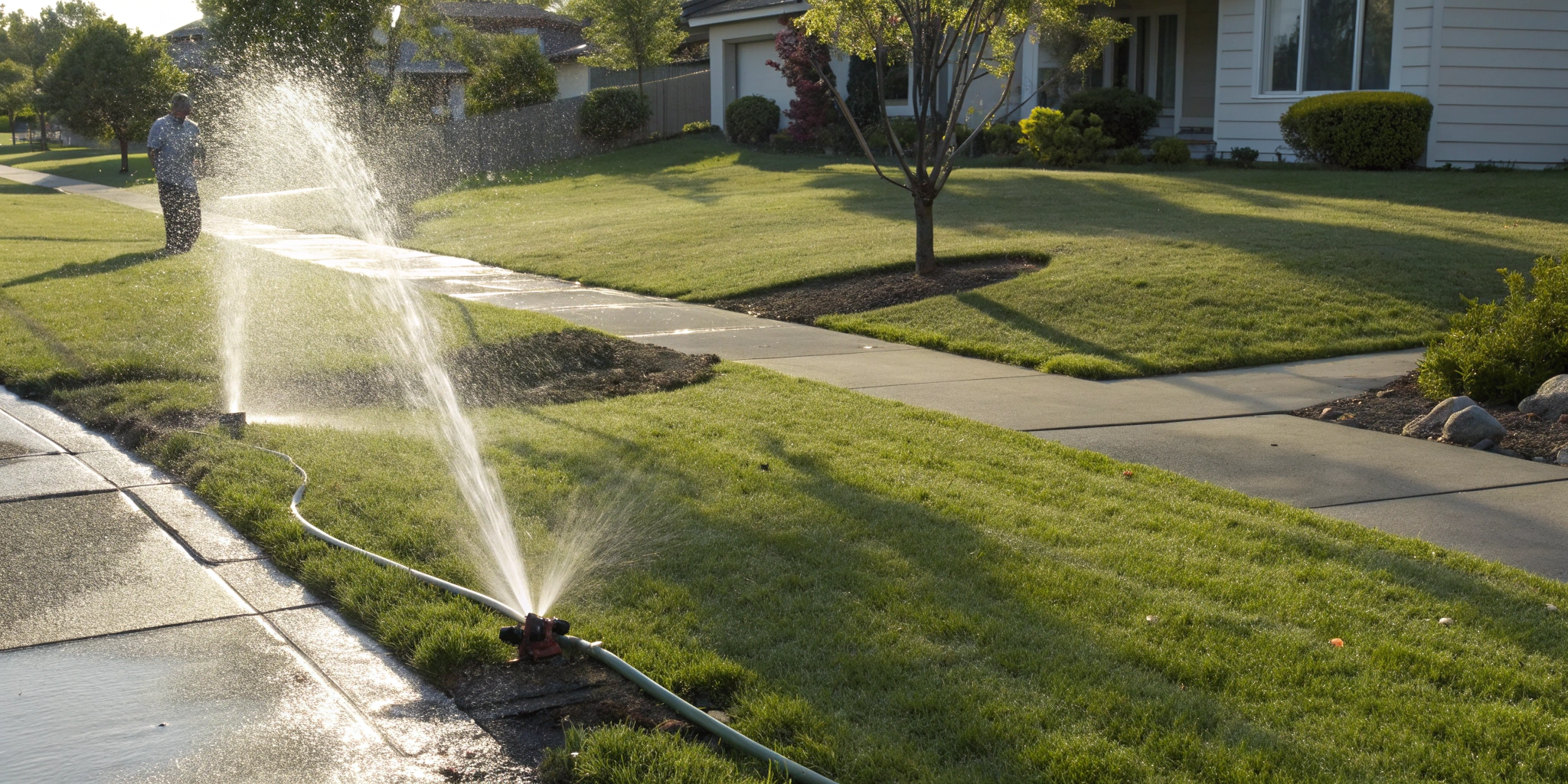
One of the most straightforward signs of a broken water line is a patch of your yard that’s constantly wet or mushy. If you notice puddles forming when it hasn’t rained or an area of grass that is significantly greener and lusher than the rest, it could be from a leaking pipe underground. This excess water creates soggy spots that never seem to dry out, pointing directly to a problem below the surface.
Notice a Drop in Water Pressure
Is your shower suddenly feeling weak, or does your kitchen faucet have less force than it used to? A sudden and persistent drop in water pressure throughout your home is a strong indicator of a water line break. When water is escaping from a crack in the pipe outside, less of it makes it into your house. This loss of pressure is a clear signal that something is wrong with your main supply line.
Check for a Spike in Your Water Bill
Your water bill is often the first place a hidden leak will show itself. If you receive a bill that is unexpectedly high and you can’t account for the increase with extra laundry or watering the lawn, you likely have a leak. That water is being used somewhere, and if it’s not inside your home, it’s probably escaping from a broken pipe underground. Don’t ignore this financial clue; it’s telling you to act fast.
Watch for Discolored Water
If the water coming from your faucets suddenly looks rusty, brown, or filled with sediment, it’s a serious warning sign. A break in the main water line can allow dirt, soil, and other contaminants to enter your plumbing system. This not only indicates a pipe issue but also poses a potential health risk. Clean water is essential for any home, so addressing discolored water is a top priority for your residential plumbing.
Listen for Hissing or Bubbling Sounds
Sometimes, you can hear a water line break. If you stand in your yard near where the water line enters your home, listen carefully. Hissing, bubbling, or roaring sounds when all the water inside is turned off can indicate that water is escaping from a pipe under pressure. You might also hear these sounds near the water meter. It’s an unusual sign, but it’s a definitive one.
Why Do Outdoor Water Lines Break?
A broken outdoor water line can feel like it came out of nowhere, but there’s always a reason. The pipes running to your home are constantly under pressure from the water inside and the environment outside. Understanding what causes these breaks can help you spot potential issues. From the age of your home to the unpredictable Spokane weather, several factors can put your main water line at risk.
Aging Pipes
Pipes don’t last forever. If you live in an older home, your water lines might be made of materials like galvanized steel, which are prone to corrosion. Over time, rust and mineral buildup can weaken the pipe walls from the inside out, eventually leading to cracks or total failure. After decades of constant pressure and environmental stress, even newer materials can fail. If your home’s plumbing is getting on in years, it’s a good idea to be aware of the increased risk to your residential plumbing.
Freezing Temperatures and Weather Shifts
Here in Spokane, we know how cold the winters can get. Those freezing temperatures are a major threat to your outdoor water lines. When water freezes, it expands with enough force to crack a solid metal pipe. This is especially risky for pipes that aren’t buried deep enough. The problem is made worse by freeze-thaw cycles, where the ground repeatedly shifts and puts additional stress on the pipes. A sudden cold snap can be all it takes to turn a small vulnerability into a major water leak repair emergency.
Shifting Soil and Ground Movement
The ground beneath your property isn’t as stable as it looks. Soil can shift for many reasons, from heavy rains to the natural expansion that comes with changing seasons. Nearby construction or even a large tree’s roots growing in search of water can put immense pressure on a pipe. This movement can bend or disconnect sections of your water line, creating stress points that eventually lead to a break. It’s a slow process that often goes unnoticed until a leak appears, making it a common cause of unexpected pipe failure.
High Water Pressure or Faulty Installation
Sometimes, the problem isn’t the pipe itself. Water pressure that’s too high puts constant strain on your entire plumbing system, weakening pipe joints and fittings over time. Another common culprit is a faulty initial installation. If the pipes weren’t properly joined or sealed during construction, they start with a built-in weak spot. These installation errors might not cause problems for years, but they create a ticking clock that can lead to a sudden and messy water line break.
Suspect a Water Line Break? Take These Steps Now
If you’ve spotted the signs and think you have a water line break, don’t panic. Acting quickly can save you a lot of money and stress by minimizing the damage to your property. The key is to follow a few simple, immediate steps to get the situation under control before a professional arrives. Think of it as first aid for your home’s plumbing. By taking these actions, you’re protecting your home, your yard, and your wallet. Here’s exactly what you need to do, step by step.
Shut Off Your Main Water Supply
This is your absolute first move. Before you do anything else, find your home’s main water shut-off valve and turn it off. This stops the flow of water to the break, preventing more water from flooding your yard and potentially damaging your home’s foundation. The valve is usually located in a basement, crawl space, or outside near your water meter. Turning it off right away is the single most important thing you can do to prevent further water damage. If you’re not sure where it is, take a few minutes to locate it now so you’re prepared for any future emergency.
Call Action Craft Experts for Help
Once the water is off, your next call should be to a professional. A broken water line isn’t a DIY project; it requires specialized tools and expertise to locate and fix the problem correctly and safely. Contacting an emergency plumber immediately ensures you get a safe, expert repair that lasts. Our team at Action Craft Experts is ready to handle these situations quickly and efficiently. We specialize in water leak repair and can diagnose the issue with precision, getting your water service restored without causing unnecessary disruption to your property. Give us a call so we can get a technician out to you right away.
Document the Damage
While you wait for help to arrive, grab your phone and start taking pictures and videos. Document everything you see—the puddles in the yard, any visible pipe damage, water seeping near your foundation, and even the reading on your water meter after you’ve shut the water off. Make notes about when you first noticed the problem. This documentation is incredibly helpful when you file an insurance claim. Having clear evidence of the damage and its extent can make the claims process much smoother and help ensure you get the coverage you’re entitled to.
Protect Your Property
If the water is pooling near your house, do what you can to protect your foundation. You can use buckets, dig a small trench, or even use sandbags to divert the water away from your home. The goal is to keep moisture from seeping into your foundation, which can cause serious structural problems over time. This simple step can prevent a plumbing issue from turning into a major home repair project. It’s a small effort that can make a big difference in protecting your property from long-term, costly damage while you wait for professional help.
Don’t Attempt a DIY Repair
It might be tempting to grab a shovel and start digging, but it’s best to leave this job to the pros. Outdoor plumbing problems often involve complex issues, from navigating underground utility lines to ensuring the repair meets local codes. Attempting a fix yourself can lead to bigger problems, and you could even risk contaminating your clean water supply. Taking care of leaks quickly is key to keeping your water safe and preventing more damage, and that means calling a professional. We have the right equipment to handle the job safely and effectively, saving you the headache and potential expense of a failed DIY attempt.
Who’s Responsible for the Repair?
When you discover a water line break, one of the first questions that pops into your head is, “Who’s going to pay for this?” It’s a stressful situation, and the answer isn’t always straightforward. The responsibility for the repair depends entirely on where the break is located. In short, if the break is on your property, the financial responsibility likely falls on you. If it’s on public property, it’s usually up to the city or your local water utility to handle it.
Understanding this distinction is key to getting the problem fixed quickly without facing unexpected costs. Let’s walk through how to determine who is responsible for the repair, from identifying your property line to understanding what your insurance may or may not cover. This knowledge will help you feel more in control and make informed decisions when you need to act fast.
Understanding Your Property Line
Think of your home’s water supply system in two parts. First, there’s the water main, which is the large pipe that runs under the street, supplying water to your entire neighborhood. This is owned and maintained by the city or a public utility. Then there’s the service line, which is the smaller pipe that branches off the main and runs underground to your house.
Your responsibility starts where the city’s ends. Typically, you own the service line from the point where it connects to the public main all the way into your home. This connection point, often near the curb or sidewalk at a spot called the curb stop or water meter, is your plumbing property line. Any leaks or breaks along that service line are yours to fix.
Homeowner vs. City Responsibility
Here’s the simple breakdown: if the water line breaks on the city’s side of the water meter, they are responsible for the repairs. You might notice water bubbling up in the street or a public right-of-way. In that case, your first call should be to your local water utility.
However, if the leak is anywhere on your side of the meter—meaning anywhere in your yard or under your home’s foundation—you are responsible for arranging and paying for the water leak repair. This means it’s up to you to call a professional plumber to diagnose the problem, excavate the area if needed, and fix the pipe. It can feel daunting, but knowing this upfront saves you from wasting time trying to get the city to fix a problem that’s on your property.
Clearing Up Utility Company Myths
Many homeowners assume that their standard insurance policy or the local utility company will cover the cost of a broken water line on their property. Unfortunately, this is a common and often costly misconception. Your utility provider’s responsibility ends at the public water main. They are not responsible for the private service line that connects to your home.
Similarly, a standard homeowner’s insurance policy typically covers water damage to your home’s interior—like if a pipe bursts inside and ruins your drywall and floors. However, most base policies explicitly exclude coverage for the repair or replacement of the exterior underground service line itself. This leaves many homeowners surprised by a bill that can run into thousands of dollars.
What About Service Line Insurance?
So, if your standard policy doesn’t cover the pipe, what can you do? This is where service line insurance comes in. This is an optional add-on, or “endorsement,” that you can purchase for your homeowner’s insurance policy. It’s specifically designed to cover the cost of repairing or replacing damaged utility lines on your property, including water, sewer, and gas lines.
This coverage can be a lifesaver, as it often pays for excavation, the pipe repair itself, and even the cost of restoring your lawn or driveway. Since many people mistakenly believe this coverage is already included in their policy, it’s a good idea to call your insurance agent and ask about adding a service line endorsement. It’s a small investment that provides significant peace of mind.
Will Your Homeowner’s Insurance Cover It?
When you’re dealing with a soggy yard and a potential water line break, the last thing you want is a surprise bill. It’s natural to assume your homeowner’s insurance will step in, but coverage for outdoor water lines can be tricky. Many standard policies cover water damage that happens inside your home, but they often draw the line—literally—at your foundation. The external pipes that connect your home to the municipal water supply are frequently excluded.
Understanding what your policy covers before you have a problem is the best way to protect yourself from a massive, unexpected expense. A quick call to your insurance agent or a careful read-through of your policy documents can save you a lot of stress down the road. Let’s walk through what you need to know about insurance and water line repairs.
Know Your Policy’s Limitations
Many homeowners mistakenly believe that their insurance will automatically cover a break in the water or sewer line on their property. Unfortunately, this is one of the most common and costly assumptions you can make. A standard homeowner’s policy is designed to protect the structure of your home and your belongings. The service lines buried in your yard are often considered external to that structure. Your policy might cover the resulting damage if a broken pipe floods your basement, but it likely won’t pay for the plumbing leak repair itself. Pull out your policy and look for sections on “service lines” or “utility lines” to see exactly what is and isn’t covered.
Watch Out for Common Exclusions
Even if your policy seems to offer some coverage, you need to be aware of common exclusions. Insurance is meant to cover sudden and accidental damage, not problems that arise from a lack of maintenance. Things like gradual corrosion, rust, tree root intrusion, or damage from shifting soil are often excluded because they’re considered preventable or due to normal wear and tear. In fact, about 32% of homeowners incorrectly think this kind of service line coverage is included in a basic policy. Knowing these exclusions helps you understand why your claim might be denied and highlights the importance of proactive pipe maintenance.
The Benefit of a Service Line Endorsement
If you’ve discovered your policy doesn’t cover your outdoor water lines, don’t panic. There’s a solution. Most insurance companies offer something called a “service line endorsement” or “rider,” which is an affordable add-on to your existing policy. This specific coverage is designed to pay for the cost of repairing or replacing damaged utility lines on your property, including water, sewer, and gas lines. For a small annual fee, you can get thousands of dollars in protection. As anyone who has faced a four-figure repair bill will tell you, having water and sewer line coverage is a godsend. Call your insurance agent and ask about adding it to your policy.
How to Document for an Insurance Claim
If you have service line coverage and need to file a claim, proper documentation is your best friend. Before our team at Action Craft Experts begins the repair, take clear photos and videos of the affected area. Document the puddles, soggy ground, and any visible signs of the break. Once you file the claim, keep a detailed log of every conversation you have with your insurance company—note the date, time, and the name of the person you spoke with. Save all emails and correspondence. Finally, hold onto every invoice and receipt from the repair work. This paper trail will make the claims process much smoother and help ensure you get the full reimbursement you’re entitled to.
How to Prevent Future Water Line Breaks
Dealing with a broken water line is a major headache, but the good news is you can take steps to prevent it from happening again. A little proactive care for your plumbing system goes a long way in protecting your property and your wallet from the stress of an unexpected break. By paying attention to a few key areas, you can significantly reduce your risk and keep your water flowing where it should.
Schedule Regular Pipe Inspections
If you live in an older home, your plumbing system has been working hard for decades. Over time, pipes can corrode, joints can weaken, and small issues can develop without any obvious signs. Scheduling regular pipe inspections with a professional is one of the smartest preventative measures you can take. A plumber can spot potential trouble spots, like corrosion or stress fractures, long before they fail. This helps you catch problems early and address them on your own terms, not in an emergency.
Insulate Pipes Before Winter
Here in Spokane, we know how cold the winters can get. That cold is a major threat to your pipes. When water freezes, it expands, putting immense pressure on the pipe walls until they crack or burst. You can protect your plumbing by insulating any exposed water lines, especially those in unheated areas like crawl spaces, basements, or garages. Simple foam pipe sleeves or heating tape are effective solutions. It’s also a great habit to disconnect your garden hoses and shut off the water to outdoor spigots before the first hard freeze hits.
Manage Your Water Pressure
High water pressure might feel great in the shower, but it puts constant strain on your entire plumbing system. This stress can weaken pipe joints, damage fixtures, and eventually lead to leaks or a full-blown break. You can easily check your home’s pressure with an inexpensive gauge from a hardware store; ideally, it should be between 40 and 60 PSI. If your pressure is too high, a plumber can install a pressure-reducing valve to bring it down to a safe level. This simple adjustment can extend the life of your pipes and appliances, preventing costly water leak repairs down the road.
Ensure Proper Yard Drainage
What happens in your yard can directly affect the pipes buried beneath it. Poor drainage can lead to water-saturated soil, which is heavier and can shift or settle over time. This ground movement puts external pressure on your water line, potentially causing it to bend, crack, or break. To prevent this, make sure your gutters are clean and your downspouts direct water far away from your foundation. If you notice persistent soggy spots in your yard, you may need to improve the grading to encourage proper drainage. This helps keep the soil around your pipes stable and secure.
Why Call a Professional for Water Line Repair?
When you’re facing a potential water line break, the thought of trying to fix it yourself might cross your mind. But this is one of those jobs where a DIY approach can quickly turn a bad situation into a catastrophe. A broken water line requires specialized knowledge and equipment to fix correctly and safely. Calling a professional plumber isn’t just about convenience; it’s about protecting your property from extensive damage, ensuring the repair is done right the first time, and saving yourself a massive headache. A professional has the experience to diagnose the problem accurately, handle the repair efficiently, and spot potential issues that could cause trouble down the road.
Access to Advanced Leak Detection Tools
One of the biggest challenges with an underground water line break is pinpointing the exact location of the leak without tearing up your entire yard. Professionals come equipped with advanced leak detection tools, like acoustic sensors and video inspection cameras, that can find the source of the problem with incredible accuracy. This technology allows for a much less invasive repair process, minimizing the damage to your landscaping and property. Instead of guessing and digging, a professional can identify the issue quickly, which is the first step in preventing further water damage and contamination.
Fast, Emergency Service When You Need It
A broken water line is a true plumbing emergency that can’t wait. The longer water flows, the more damage it causes to your foundation, yard, and even neighboring properties. That’s why having access to a team that offers fast, emergency service is so important. Recognizing the signs early and calling for help immediately can make all the difference. A professional water leak repair service ensures that an expert is on-site quickly to manage the situation before it gets worse, shutting off the water and starting the repair process right away.
Get a Comprehensive Repair in Spokane
It’s a common myth that underground water and sewer lines are indestructible, but the truth is, they can and do fail. When they do, you need more than just a quick patch. A professional plumber provides a comprehensive repair, which means they don’t just fix the immediate leak. They assess the condition of the surrounding pipe, identify the root cause of the break—whether it’s age, corrosion, or ground movement—and implement a durable, long-term solution. This thorough approach ensures all aspects of the problem are addressed, giving you peace of mind that your plumbing is secure.
Save Money and Avoid DIY Headaches
While you might think a DIY repair will save you money, it often costs more in the long run. A failed attempt can lead to more significant water damage, and many homeowner’s insurance policies won’t cover issues caused by improper repairs. Professionals get the job done correctly and efficiently, preventing the costly secondary damage that can come from an unresolved leak. Hiring an expert from the start saves you from the stress of a complex repair, protects your property, and is a smart financial decision that avoids much larger expenses down the line.
Related Articles
- 6 Signs of a Broken Main Water Line to Your House
- How Much to Fix a Broken Water Pipe Underground?
- 6 Signs: How to Tell if a Pipe Burst Underground
Frequently Asked Questions
How can I tell if I have a broken water line or just a leaky sprinkler system? A great way to check is to turn off your irrigation system at its main valve. If the soggy spot in your yard starts to dry out, you likely have a sprinkler issue. However, if the area stays wet or the drop in water pressure inside your house persists, the problem is probably with your main water line, since it’s under constant pressure.
My water bill spiked, but I don’t see any wet spots in my yard. Could it still be an underground leak? Yes, it absolutely could be. Not all underground leaks create obvious puddles. Depending on your soil type and the yard’s grading, the escaping water could be draining deep into the ground or toward a storm drain without ever surfacing. An unexplained high water bill is one of the most reliable signs of a hidden leak, so it’s always worth investigating.
What does a professional water line repair actually involve? Will my entire yard be dug up? This is a common worry, but destroying your yard is the last thing we want to do. Professionals use modern acoustic and camera-based leak detection equipment to pinpoint the exact location of the break. This allows for a much more targeted repair, often requiring only a small area to be excavated. This precise approach minimizes damage to your landscaping and is far less disruptive than digging based on guesswork.
If the break is on my property, does that mean I have to pay for everything out of pocket? While you are responsible for the service line on your property, you might not have to cover the entire cost yourself. A standard homeowner’s policy usually doesn’t cover the pipe repair, but many people have an add-on called a “service line endorsement.” It’s worth calling your insurance agent to see if you have this coverage, as it’s specifically designed to handle these kinds of repairs.
How quickly do I really need to act if I only suspect a small leak? You should act immediately. Even a small, slow leak can waste thousands of gallons of water and cause serious, long-term damage. Over time, that moisture can erode the soil supporting your home’s foundation, leading to major structural problems. The moment you suspect a leak, your first step should be to shut off the main water supply and then call a professional.